Designing for friction to achieve 80% creator verification
I owned redesign of the creator verification experience, transforming a mandatory compliance requirement into a trust-building experience. By strategically staging friction and increasing transparency, the redesigned flow achieved an 80% verification completion rate after launch.
Role
Product Designer
Timeline
2 Months
Team
1 CEO, Co-Founder
1 CPO, Co-Founder
1 CTO
3 Engineers

Context
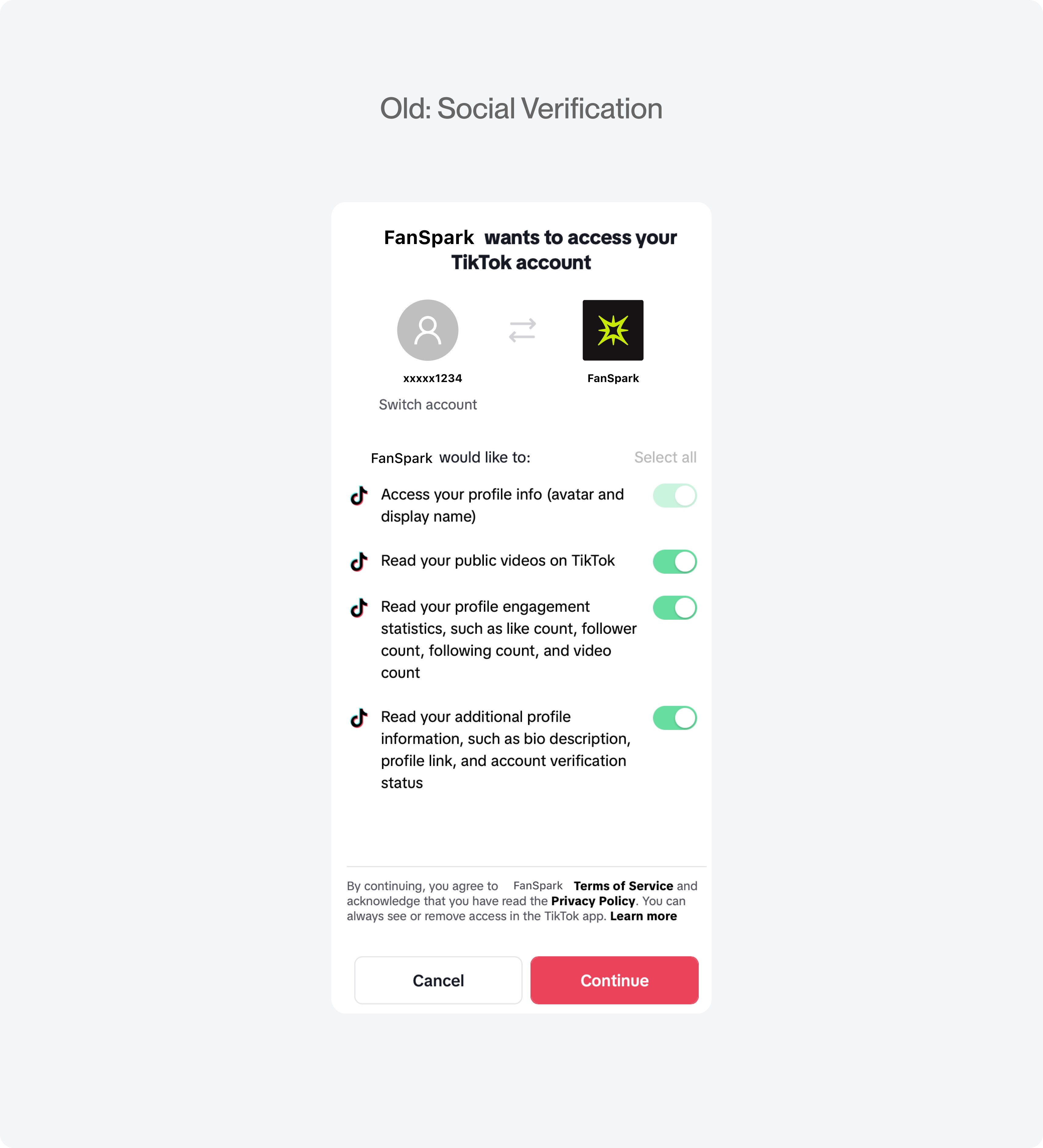
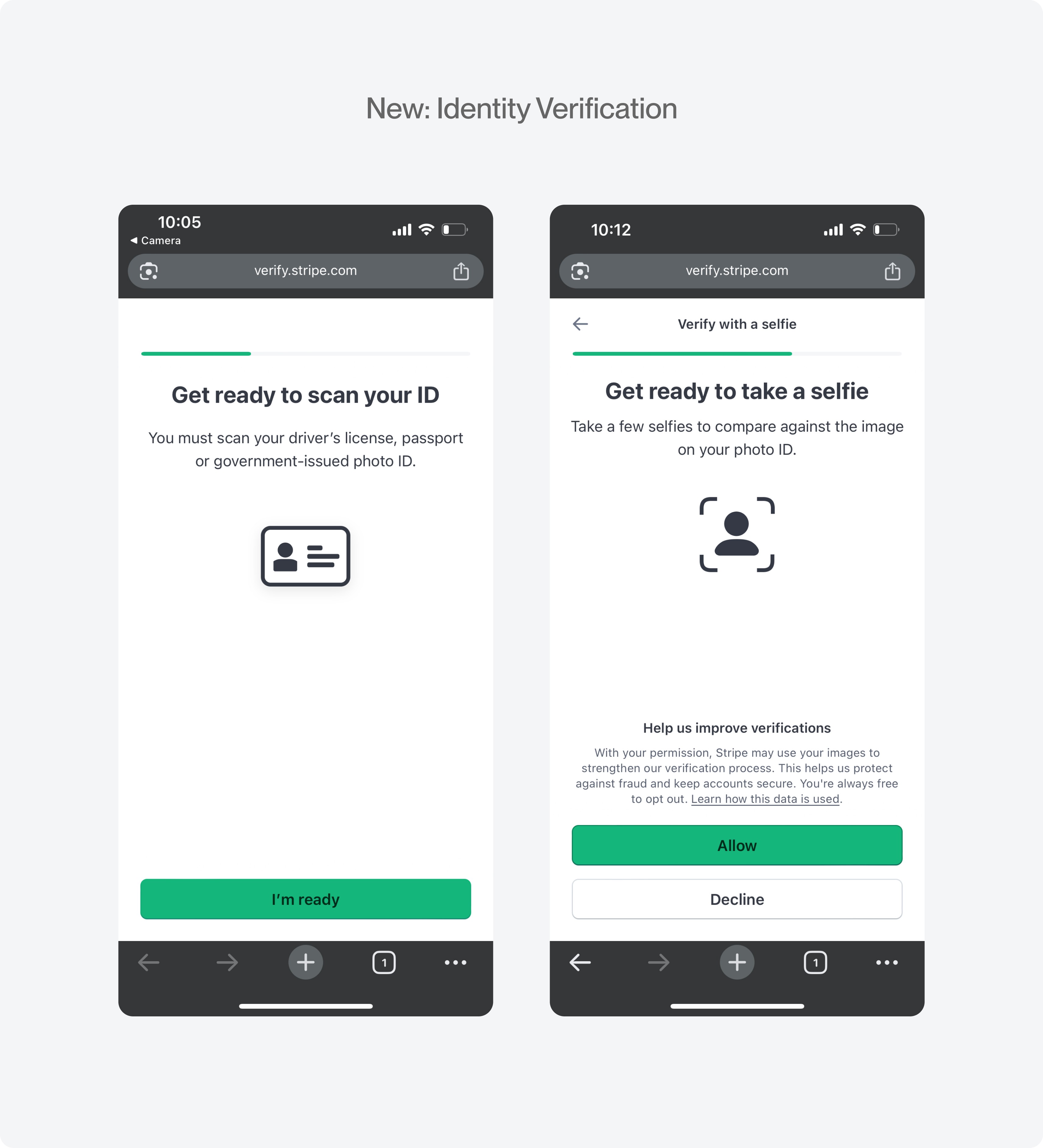
Creator verification shifted from social authentication to ID verification
Fanspark, a sports creator platform, needed to verify creators before they could post content and monetize. When business requirements changed, we moved from social authentication to Stripe Identity to prevent fraud and maintain compliance.
Problem
Simply swapping one requirement with another doesn't solve the problem. The current experience didn't support a flow with more sensitive information. ID verification introduced significantly more friction by asking for sensitive information
Identity verification required creators to submit a government ID and take a selfie, introducing significantly more friction than social authentication, which is familiar and low-friction.
Challenge
Make identity verification easy to complete while meeting compliance requirements
With ID verification now required, I had to balance competing needs: make the experience feel trustworthy and easy to navigate for creators, while preserving the verification requirements needed for fraud prevention and compliance.
Constraints
Third-party dependencies
Stripe owned the identity verification experience limiting what could be designed
Non-neogtiable requirement
ID couldn't be removed or shortened, so the only lever available was how it was presented and sequenced
Tradeoffs
Verification was required after onboarding
Stripe owned the identity verification experience limiting what could be designed
URL redirect vs. modal overlay
A modal overlay would keep users on the platform but a URL redirect was easier to build. The risk of a URL redirect was that users would lose control of the context around it but it reduces how much private info we needed to store
Linear v. segmented verification experience
A linear process satisfied business requirement but risked users not completely verification so early on in the onboarding process
General v. specific error codes
There were so many potential error codes to account for and take time to design but I opted for the minimum approve and deny.
Linear entry point v. segmented
The already existing banking flow was connected to Stripe but we didn't know if we could have two integrations connect.
User Flow
Integrating Stripe ID into the current verification experience
I worked with engineering and product to understand how Stripe Identity worked and how it would effect the existing experience. This allowed me to identity what parts of the experience I would need to design for and how to communicate that to our users. to understand the backend logic and how that would shape and influence what the end user sees.

New user flow with Stripe Identity
Design Decision
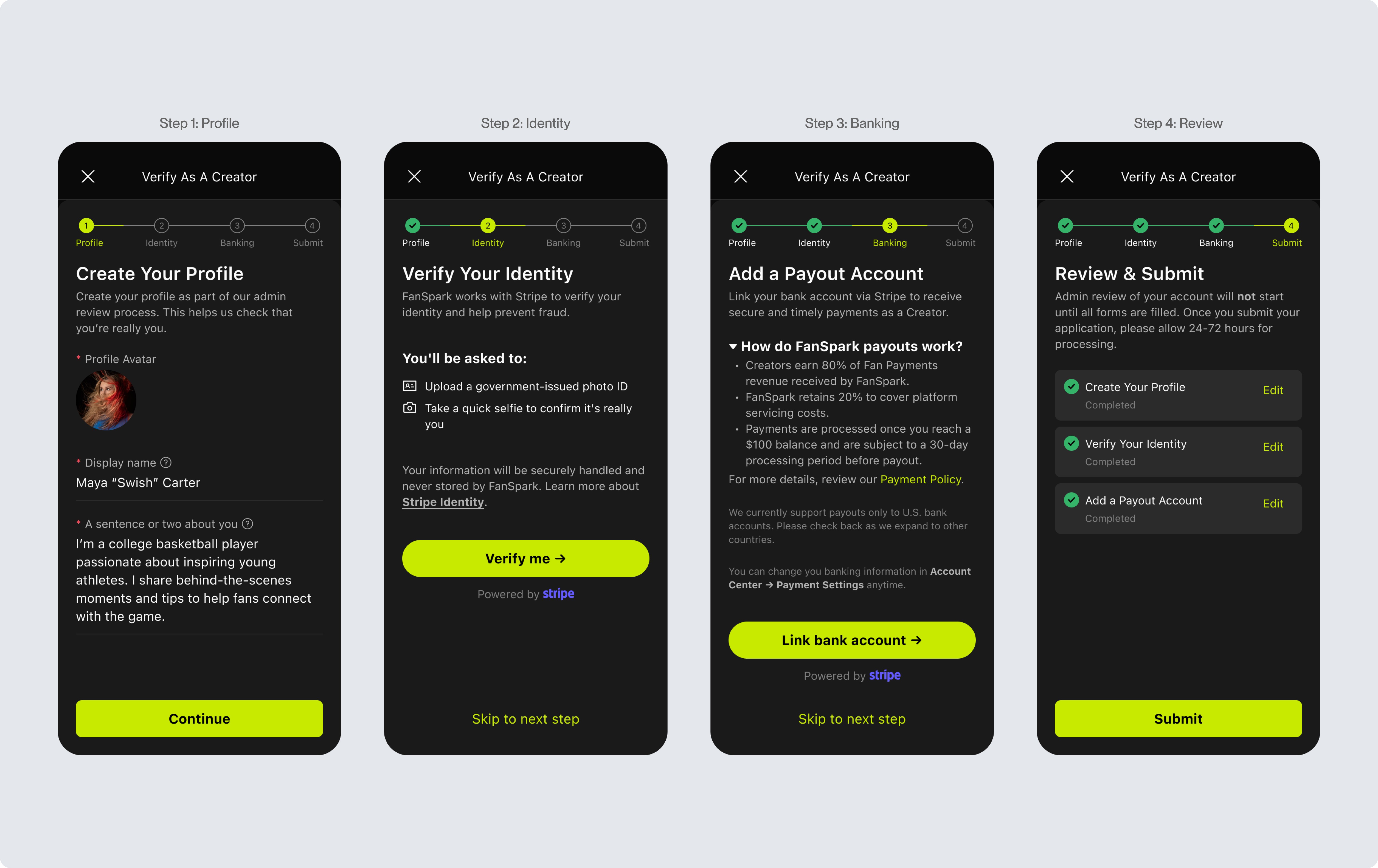
Re-ordered steps from least to most sensitive
Start with low commitment asks first, allowing creators to build trust incrementally before asking for a government ID and selfie.
Based on the sensitivity of the ID verification requirement, I reordered the verification process from least to most sensitive. Based on the time of completion, banking was more tedious to complete

Design Decision
Surface the benefit before the ask at the entry point
Led with what verification unlocks for creators, reframing the flow from obligation to value.

Design Decision
Increased transparency around sensitive information
Added explanations at the moment each piece of information was requested, replacing uncertainty with reasoning.

Validation
The flow was easy to complete, but trust varied by creator
Beta testing showed that creators could understand and complete the verification flow. However, their level of trust varied: some readily provided their information, while others were more skeptical about why it was required.
Since testing didn't reveal a usability issue with the flow itself, we shipped the design as planned and carried the trust considerations forward for future iterations.
Outcome
80% verification completion
The verification experience launch and achieved an 80% completion rate while maintaining the required identity verification process.
Final Designs
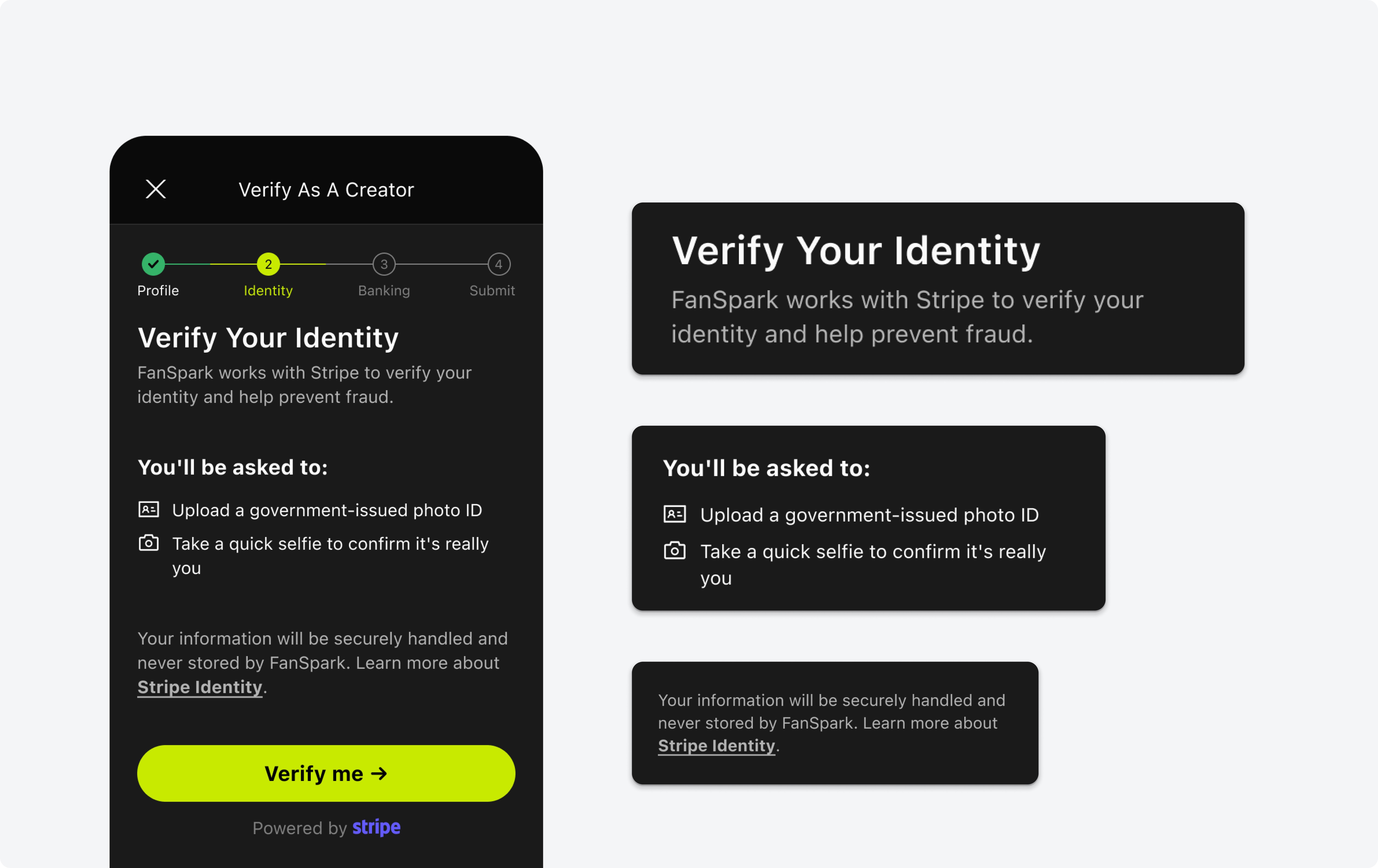
The entry point
The verification screen outlines what users will expect by clicking on the button below. This ensures that user expectations are set and that they will prepare what they need before the flow is complete. The logo below the button adds a visual cue so users can quickly recognize where they are going.
Insert recording of identity verification
Designing edge cases
Once users completed ID verification, they would be sent back to our platform to continue the rest of the verification process. This modal approach would only tell users that verification is complete, not that they had passed
So users would continue on, our platform needed to match the system status from Stripe ID. I collaborated with engineering to design 3 feedback states that would be sent from Stripe ID API.
Because verification was done through Stripe ID, users needed a clear way to understand what to do when something went wrong. The tradeoff was that messages from the platform were vague and it was unrealistic to design for every error so I designed generic messages to give users just enough. The goal was to direct them into the Stripe platform where they would see a more detailed message of the error and how to fix it.
Clear status feedback became really important at this stage.
Tradeoff: Mapping error codes would not fit within the timeline. Instead, we designed a generic one for the first round and would track common error codes later to prioritize.
Reflection
What I Learned
Sometimes friction is necessary. When you're asking users to provide sensitive information, the design opportunity is to make that friction clear, intentional, and trustworthy without treating the user experience as an afterthought.