Designing for friction to achieve 80% creator verification
I owned the redesign of Fanspark's creator verification experience, transforming a mandatory compliance requirement into a trust-building experience. By strategically staging friction and increasing transparency, the redesigned flow achieved an 80% verification completion rate after launch.
Role
Product Designer
Timeline
2 Months
Team
1 CEO, Co-Founder
1 CPO, Co-Founder
1 CTO
3 Engineers

Context
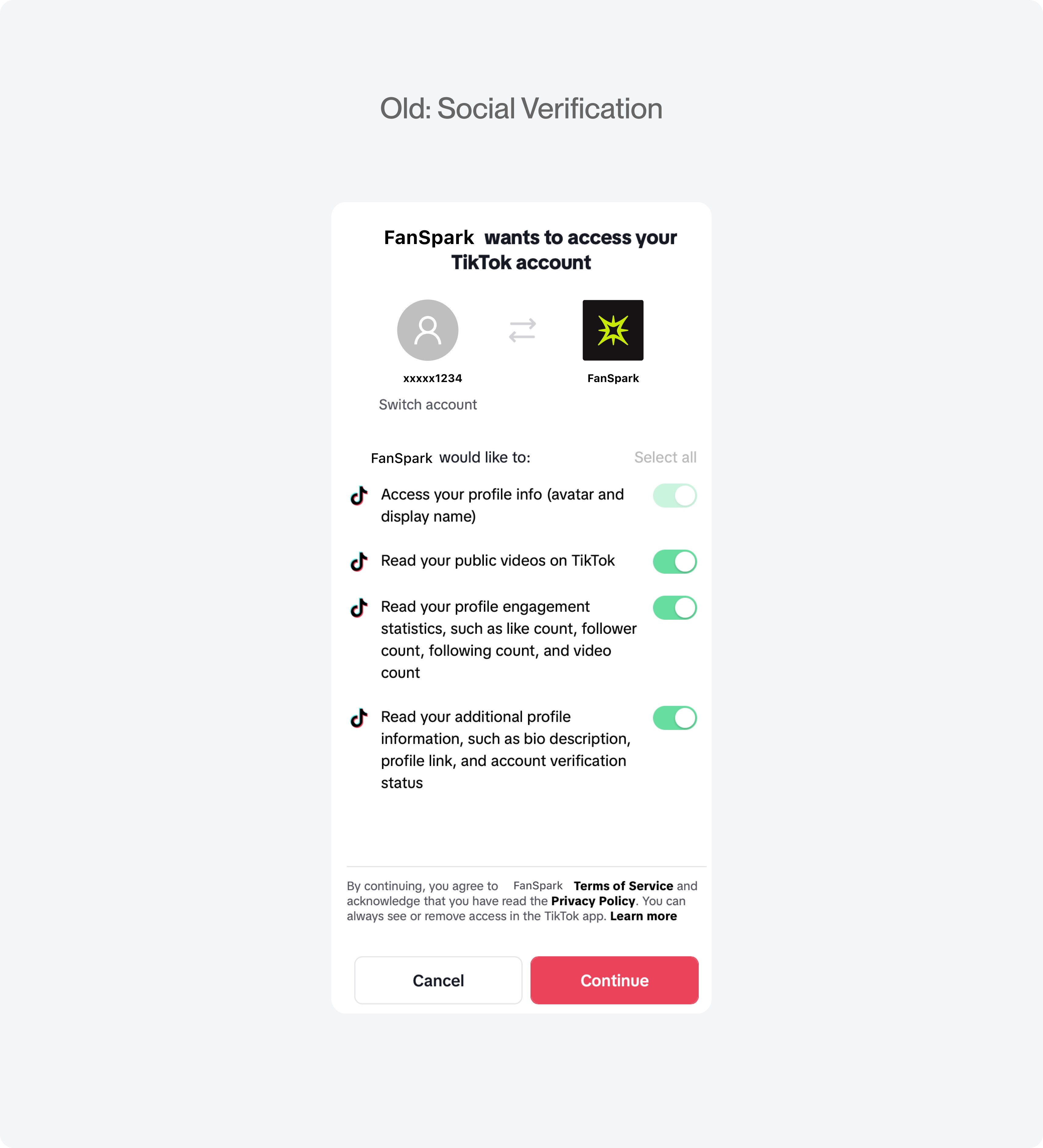
Creator verification shifted from social authentication to ID verification
Fanspark, a sports creator platform, needed to verify creators before they could post content and monetize. When business requirements changed, we moved from social authentication to Stripe Identity to prevent fraud and maintain compliance.
Problem
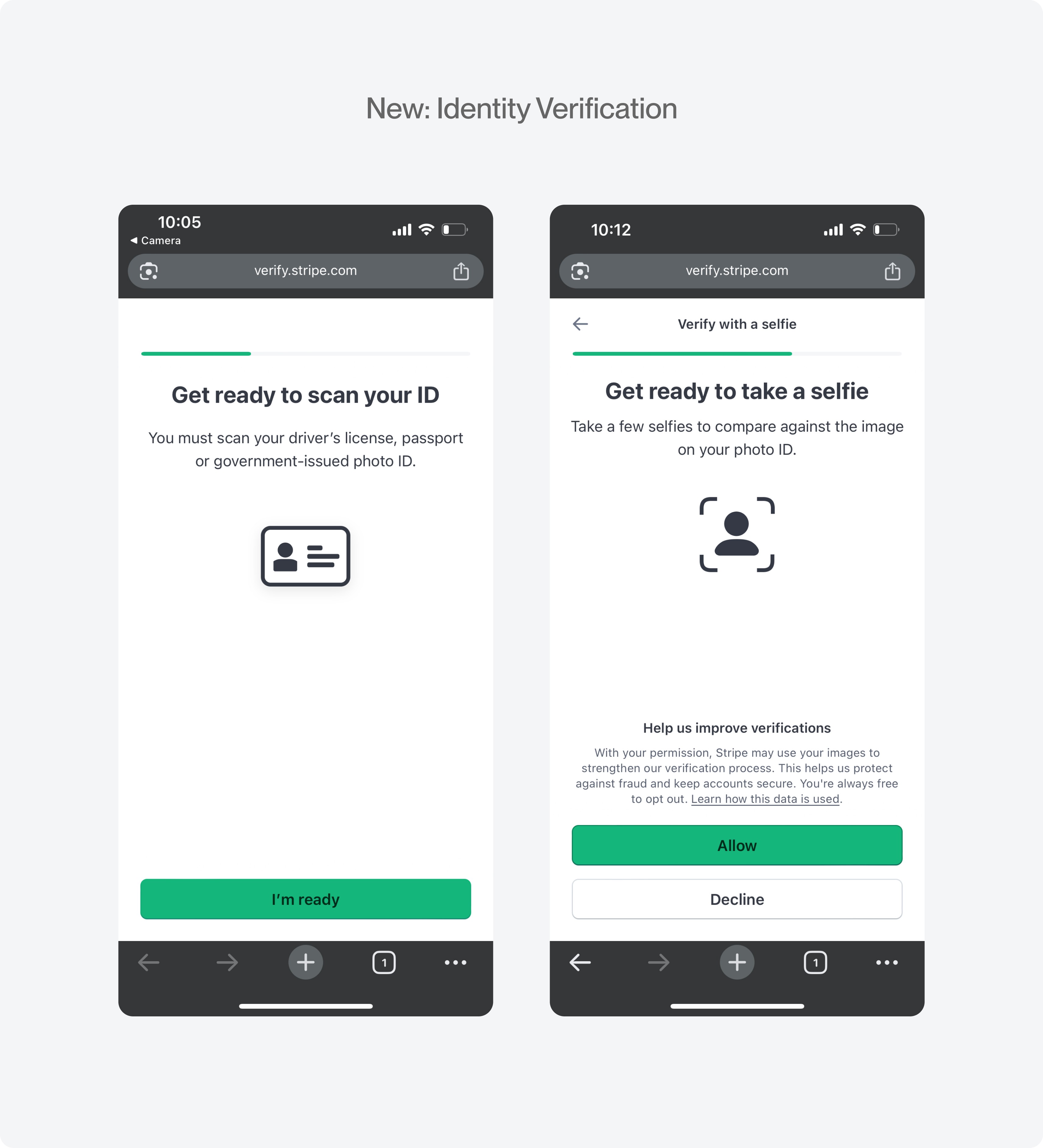
ID verification introduced significantly more friction by asking for sensitive information
Identity verification required creators to submit a government ID and take a selfie, introducing significantly more friction than social authentication, which is familiar and low-friction.
Challenge
Make identity verification easy to complete while meeting compliance requirements
With ID verification now required, I had to balance competing needs: make the experience feel trustworthy and easy to navigate for creators, while preserving the verification requirements needed for fraud prevention and compliance.
Constraints
Third-party dependencies
Stripe owned the identity verification experience limiting what could be designed
Non-neogtiable requirement
ID couldn't be removed or shortened, so the only lever available was how it was presented and sequenced
Design Decision
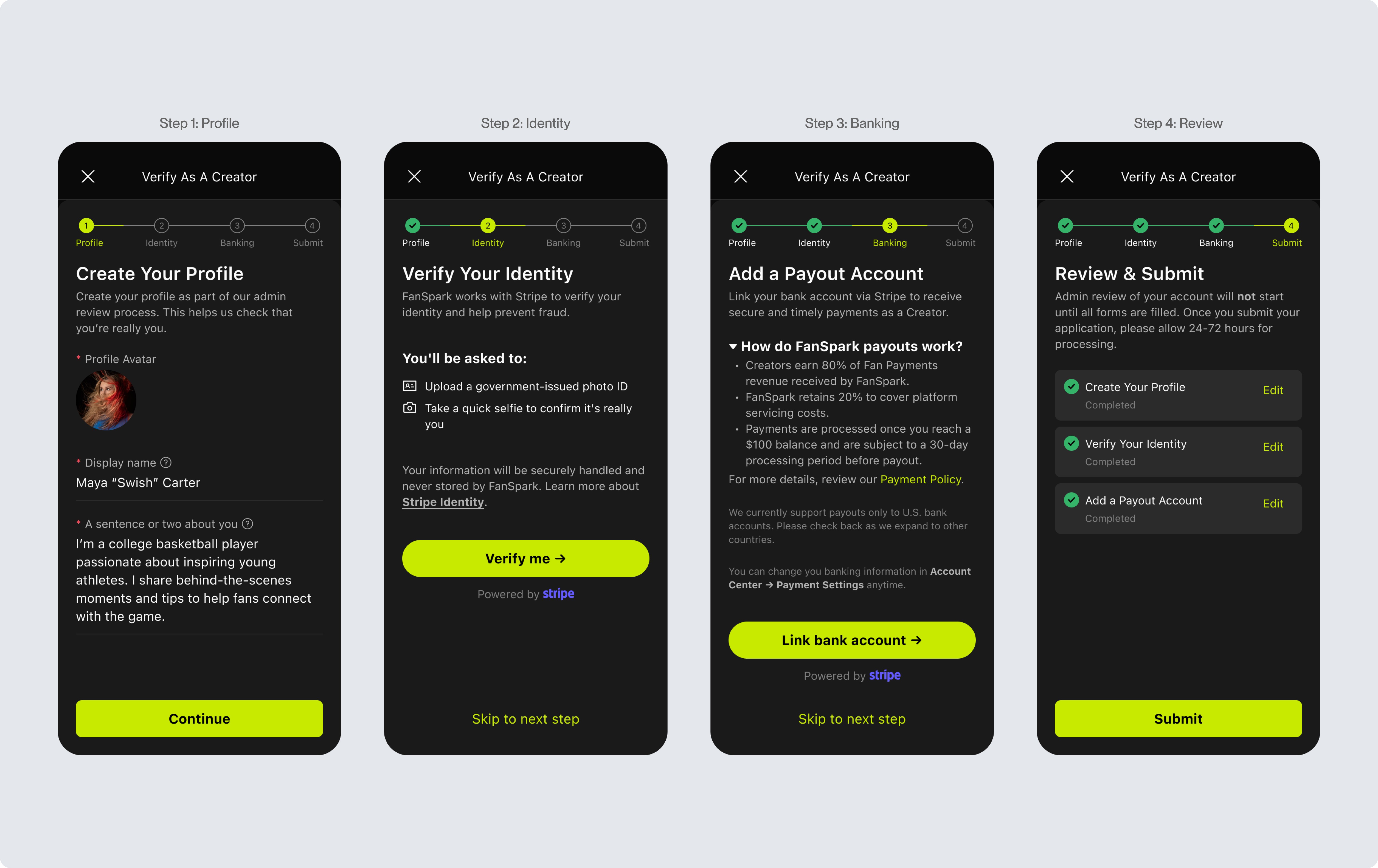
Re-ordered steps from least to most sensitive
Start with low commitment asks first, allowing creators to build trust incrementally before asking for a government ID and selfie.

Design Decision
Surface the benefit before the ask at the entry point
Led with what verification unlocks for creators, reframing the flow from obligation to value.

Design Decision
Increased transparency around sensitive information
Added explanations at the moment each piece of information was requested, replacing uncertainty with reasoning.

Validation
The flow was easy to complete, but trust varied by creator
Beta testing showed that creators could understand and complete the verification flow. However, their level of trust varied: some readily provided their information, while others were more skeptical about why it was required.
Since testing didn't reveal a usability issue with the flow itself, we shipped the design as planned and carried the trust considerations forward for future iterations.
Outcome
80% verification completion
The verification experience launch and achieved an 80% completion rate while maintaining the required identity verification process.
Reflection
What I Learned
Sometimes friction is necessary. When you're asking users to provide sensitive information, the design opportunity is to make that friction clear, intentional, and trustworthy without treating the user experience as an afterthought.